How to Find a Water Leak
A water meter that keeps ticking while the house sits quiet is the fastest answer to how to find a water leak, because a leak never takes a break. An account that suddenly grows while your habits have stayed the same is the usual first clue. The checks below cost nothing and take an afternoon, and they suit a weatherboard cottage near Government House as much as a newer unit down the hill.
If we're late, $100 comes off your bill

- Licensed and InsuredEvery job done by a licensed plumber. QBCC No: 15024607
- Fixed Quote FirstFlat-rate pricing, agreed before any work starts
- Lifetime Labour WarrantyBacked by our Fix-It-or-It's-Free guarantee (T&Cs apply)
- $0 Call-Out FeesNo extra charge for nights, weekends or public holidays

Our licensed plumber team hunts hidden leaks across Paddington most weeks, and every job is done by a licensed plumber who is licensed and insured.
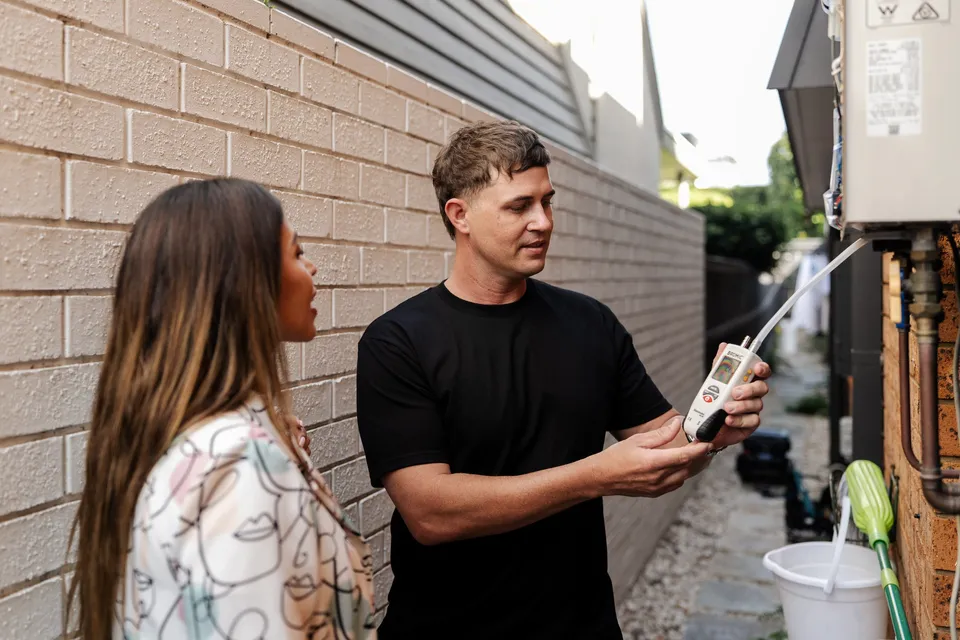
Start With a No-Use Meter Check
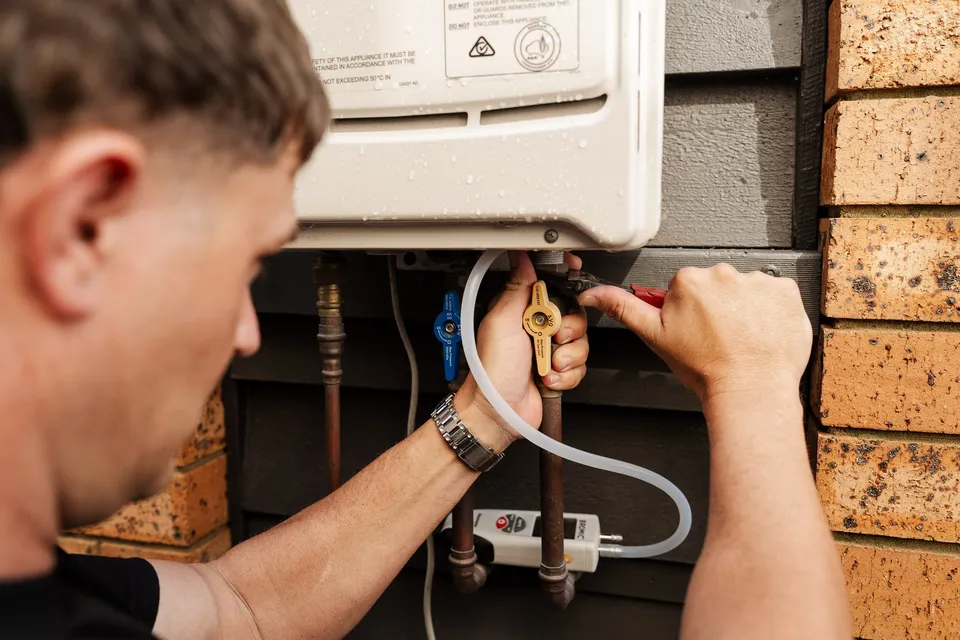
Here is the check in one line: shut every outlet, read the meter, wait while nothing should be drawing water, then read it again. Movement in the figures means a leak somewhere on the property.
What to shut down:
- every indoor tap, plus the hose outside
- the washing machine and the dishwasher
- any fridge plumbed to a water line, plus irrigation
- each shower, checked for weeps at the head and the wall plate
Photograph the display before and after, red figures included, since those small digits record the tiniest flows. Keep the stopcock beside the meter open, because the test watches what passes through it.
Urban Utilities runs programs that flag unusual consumption and contacts customers where possible, but its own advice says not to depend on that. Your own reading is the dependable check, and the losses from a leak past the meter fall on the owner.
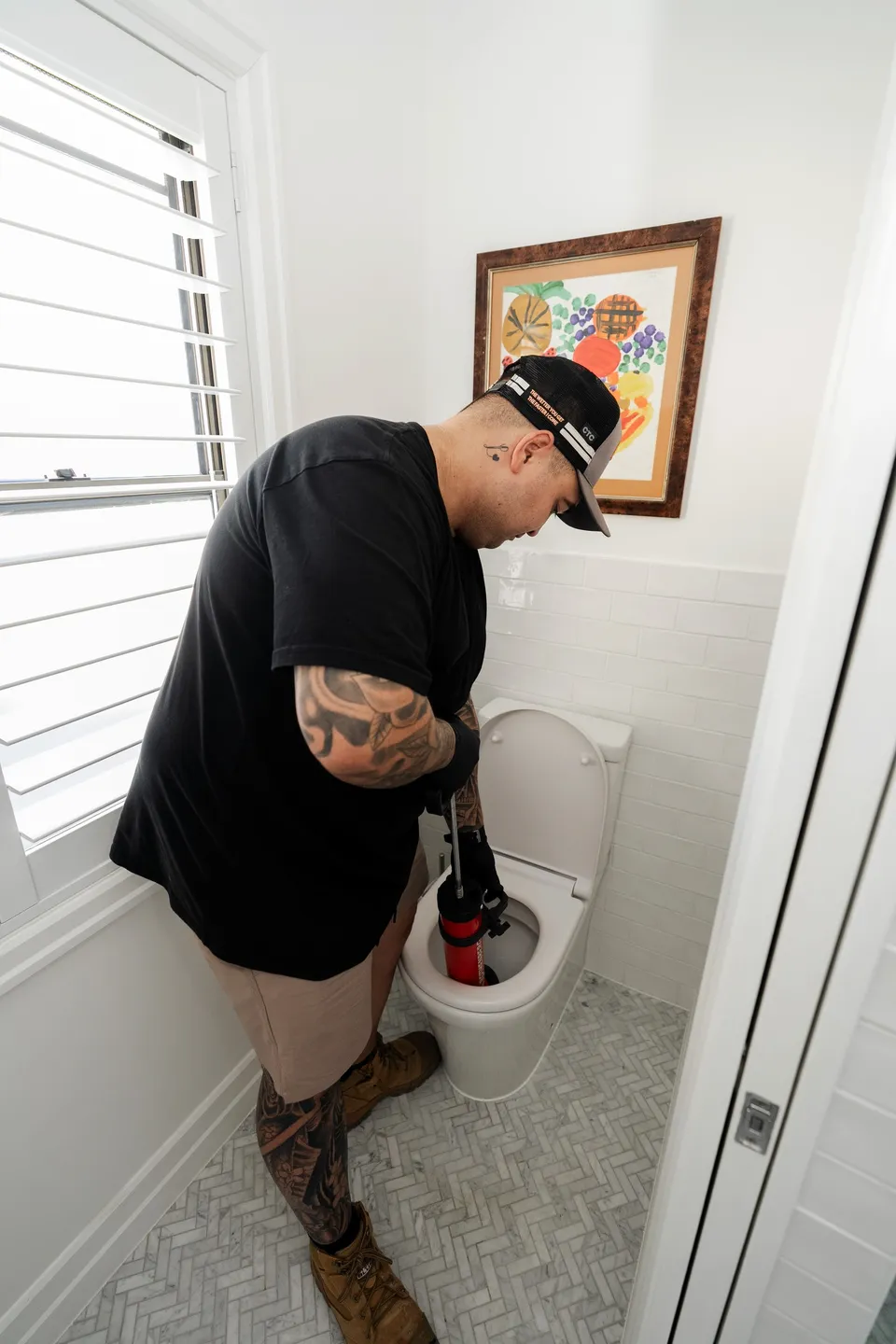
Toilets, Taps, Showers and Appliances
Indoors, hunt in this order: dye test the toilet cisterns, then the taps and showers, then plumbed-in appliances, then walls, ceilings and floors.
The cistern dye test: drip some food colouring into the toilet's cistern, do not flush, and give the colouring time to sit. Colour drifting into the pan means the cistern is leaking. The colouring rinses away afterwards and will not stain ceramic.
Confirm each tap and each shower head sits fully off, with no weep at the base or spout. Check the fridge's water connection for drips, and check the hot water system at the fittings and the relief valve.
Signs of a hidden leak inside:
- walls or ceilings gone patchy or stained
- a stale, damp odour with no obvious source
- paint, skirting or floor finishes swelling or lifting
- a warm patch underfoot, which can mark a hot water pipe
Where Water Hides in the Yard
Outside, check three spots: the outdoor taps and hose fittings for drips, any rainwater tank for unwanted mains top-up, and the ground for soggy or unusually green patches.
One slow drip from a garden fitting can waste enormous volumes over a season, so dry the fitting and watch it for a minute. Where a tank connects to town water, make sure the tank is not topping up from the mains by itself. A solenoid or internal part gone faulty can keep adding water, and that part is one for a licensed plumber.
Lawn greener than the neighbours, paving gone uneven or soil that stays wet in dry weather all point to a pipe below.
Homes with a pool get one extra test. Stand a bucket filled with pool water on the top step, so the level inside matches the pool, and mark both. Wait a day without swimming, then compare: if the pool fell further than the bucket, the pool is leaking, and matching falls are just evaporation.
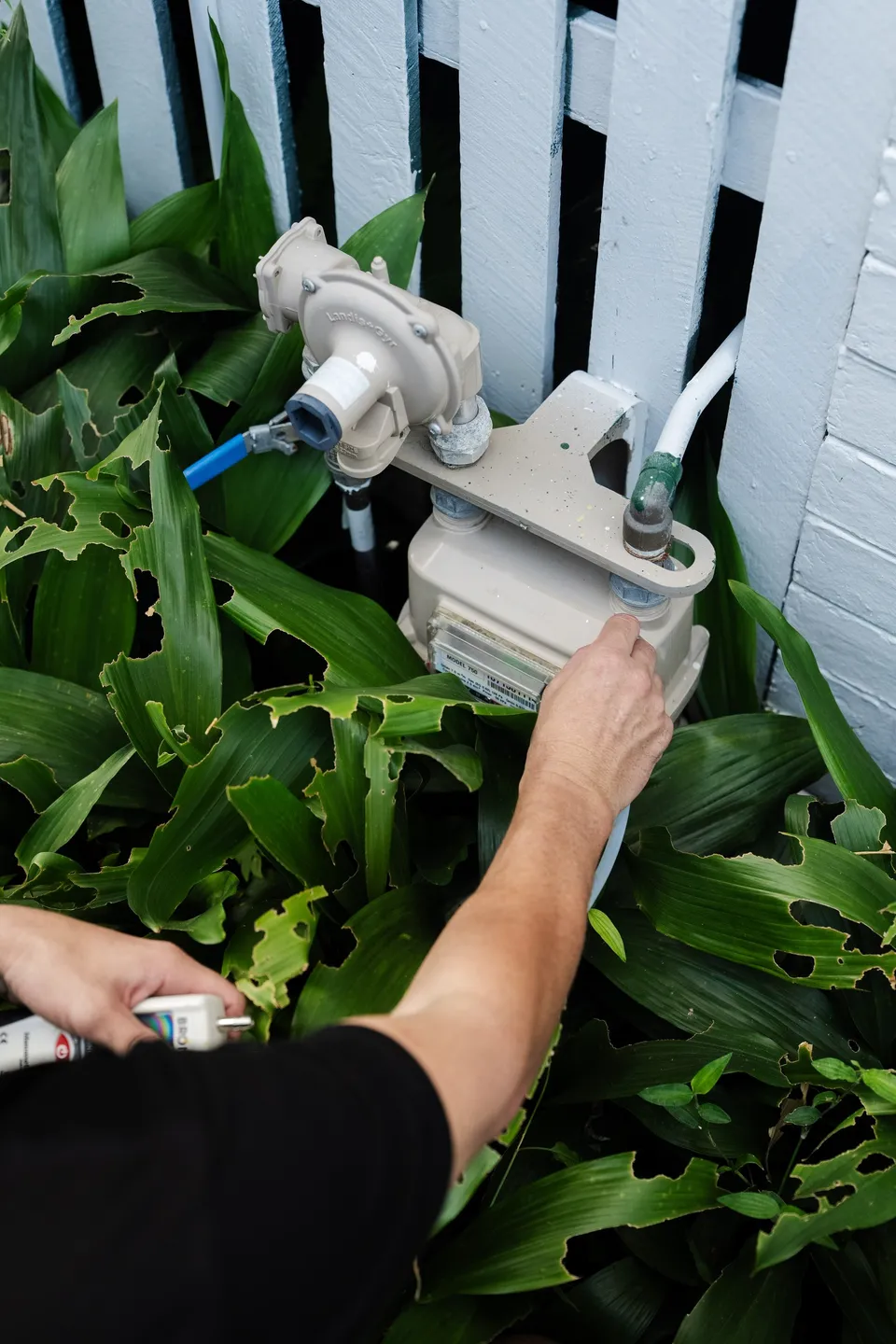
Meter Moving but Nothing Found
Two findings, two meanings: a drip found at a tap, a cistern or a fitting is the likely culprit, while a meter still moving with nothing found points to a concealed leak. A concealed leak can sit below ground, under a crossing or within a wall, shedding enormous volumes a day while nothing shows until the bill or the damage does.
Fixing a damaged pipe falls under minor work, which only a licensee may perform, with no council permit involved. Each line past the meter and onto your land is the owner's to maintain, so the repair and the water losses both land on you.
Queensland leaves a short list to anyone with the skill: a washer inside a tap, or the rubbers in a cistern. A whole tap replacement or a pipe repair belongs to a licensed plumber.
The mixed-metal joint is the Paddington wrinkle. Cottages older than the 1927 water tower were often re-plumbed in stages, and an old galvanised stub can meet newer copper under the boards. The junction corrodes where the two metals touch and can let go into the under-floor void before any drip is seen, so a moving meter with no visible leak deserves prompt attention.
Our leak detection service page traces concealed leaks by isolating sections, pressure testing and listening along the pipe run.

When to Call a Plumber
Ring a licensed plumber once the meter moves and the hunt finds nothing, or sooner if damp walls, a warm floor or water under the house appear. The plumber isolates the faulty section, carries out the repair and gives you a fixed quote before any work starts.
Hidden Leak Questions From Paddington Locals
Call (07) 3523 6484How long should I leave the meter before checking it again?
At least one hour, with every outlet shut and nothing in the house drawing water. A leak never stops, so the numbers keep creeping. Any movement after that hour means a licensed plumber should trace it.
Where will I find the water meter at my Paddington place?
Look for a small box sunk into the verge, level with the ground, in the council strip between the road and the front boundary. Lift the lid and the display appears, red figures included, and the red digits catch the smallest flows.
Can a hidden leak sit under a slab in Paddington?
Yes, water can escape unseen beneath the ground, under a crossing or inside a wall cavity, and the waste only surfaces as a big bill or damage. Most Paddington cottages stand on stumps above timber floors, so the under-floor space is the first place to check with a torch.
Will the water utility reduce my bill for a hidden leak?
Yes, the utility may reduce the bill under its concealed leak rules. The leak has to be hidden from view, past the meter on the owner's land, repaired within the allowed time, with a licensed plumber's invoice as proof. Leaking taps and running cisterns are excluded, and our leak detection page lists the rules.

Talk to Us About a Hidden LeakWe'll call you back.
Book on (07) 3523 6484 for plumbing anywhere in Paddington. We're available 24/7, there's no extra charge for nights, weekends or public holidays, and every job comes with $0 call-out fees.
To claim your $0 call-out fee, call (07) 3523 6484 today.